⌂ Home
Moneypoly logoMoneypoly
Learning Bitcoin Foundation My First Bitcoin EDK
Flagship arc

Frame → play → debrief → explain → bridge

This game is the play layer of Block 02. Let learners feel barter friction first, then use the debrief to name why money emerges and where the lesson goes next.
During play

What to watch for

  • How many trades fail because wants do not line up
  • What changes once a widely accepted money appears
  • Which money helps Maya keep value across shocks
Bridge after play

Use the result screen on purpose

Don’t stop at “that was fun.” Compare eras, name the money properties, then send learners either back to the flagship lesson, into the sats lab, forward into broken-money analysis, or into the new physical card-trading deck.

Moneypoly

Trade through history

Choose an era. Survival is required, but the real goal is to accumulate generational wealth that can outlast crises and be passed to future generations.

Goal: survive today → preserve wealth → pass it down
Trade attempts 0 Failed trades 0 Successful trades 0
Debrief prompts

Name the lesson before you move on.

  • What exactly failed in barter: search, timing, or matching?
  • What changed when one good became broadly acceptable?
  • Which money stored value best once shocks arrived?
  • What responsibility did the strongest money still leave with the holder?
Best next move

Bridge deliberately.

Use the flagship lesson page if the room still needs the core explanation. Use Sats Market if you want a modern wallet-style application layer. Then go to Block 03 to show how societies can still break money after barter is solved.

Instructions

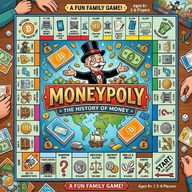
Moneypoly: the history of money

Money is the good or tool people use to live. It helps families trade their work for essentials: shelter, food, and water.

Goal: survival is the first requirement, but it is not the finish line. The real goal is to accumulate and preserve generational wealth — savings strong enough to help your children and future generations after today’s crises are over.

  1. Barter: trade goods directly. It only works when both people want exactly what the other has.
  2. Commodity Money: shells become a common good that many traders accept.
  3. Gold / Hard Commodity Money: scarce, durable money makes saving easier.
  4. Credit & Ledgers / Medici Banking: deposit heavy gold, use signed slips, and test trust, ledgers, fees, reserves, and bank runs.
  5. Fiat / Paper Money: governments can issue paper money, but it can be seized, controlled, or printed.
  6. Bitcoin / Digital Electronic Money: events still happen, but the money itself cannot be printed away or destroyed by a local ruler.

Every 3 rounds there is a crisis or event, like in real life. The question is: after you secure food, water, and shelter, can this form of money preserve wealth through environmental events, political seizure, economic downturns, and money printing?

The scorecard checks the same questions every time: survival, failed trades, purchasing power, debasement, seizure/freeze risk, ease of use, and whether prices make sense for that era. In barter, wants and needs dominate. Once money exists, relative pricing and savings become the main lesson.

The Bitcoin board is designed to show the hardest-money idea: earthquakes, fires, politics, and downturns can still hurt goods and markets, but sats saved for the future are not debased by money printing.

Final comparison

Same needs, same crises, different money

Each board asks Maya to secure food, water, and shelter, then build something worth passing down. The difference is the money system: barter matching, commodity acceptance, gold hardness, fiat trust, or Bitcoin self-custody.

Open printable facilitator kit PDF Open card trading kit
Teacher / facilitator mode

Run-of-show

  1. Frame: promise that the market will reveal the problem before you explain it.
  2. Play Barter: ask why useful goods still fail to coordinate trade.
  3. Debrief: name double coincidence of wants, search costs, and mismatch clearly.
  4. Explain with the era boards: commodity money, gold, ledgers, fiat, and Bitcoin each solve some problems and expose others.
  5. Bridge: use Sats Market for a modern app-layer example or continue to Block 03 for broken-money consequences.

Discussion prompts

  • Which board made it easiest to get essentials?
  • Which money held purchasing power through crises?
  • Who could change, seize, freeze, or debase the money?
  • Was the money easy to carry, divide, verify, and use?